Furniture design
The studio's furniture design grows out of its interior projects and shares their rigour. Every piece is conceived for a specific context, with the same attention that governs the space it will inhabit.
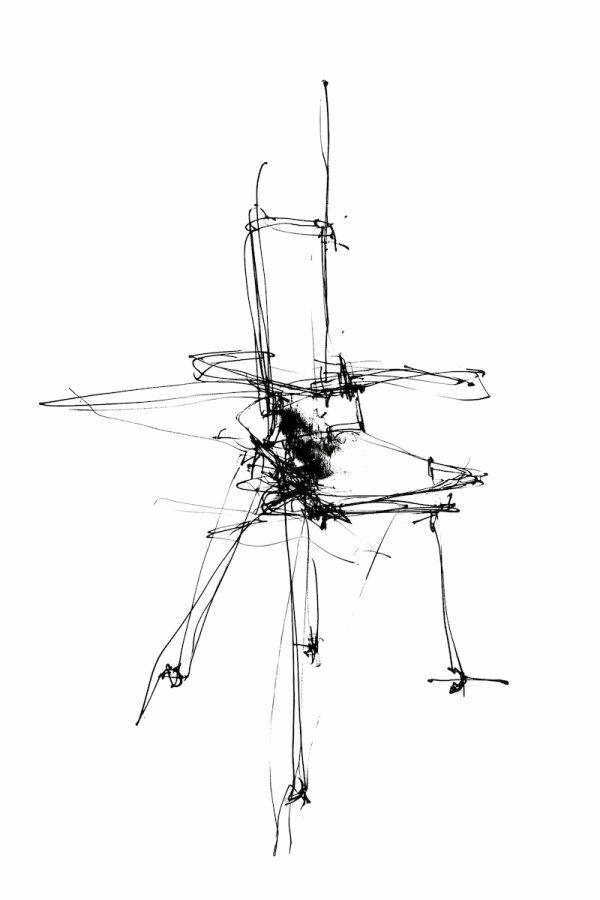
Method
The design of a piece of furniture starts from the place it will occupy. Room proportions, existing finishes, patterns of use. With companies the starting point differs but the method does not: understand the conditions before drawing.
Furniture design phases
1. Brief, positioning and research
analysis of the design brief, context of use, target audience and product positioning. Review of the existing catalogue, the brand's language and constraints relating to cost, production and distribution. Study of reference typologies, construction techniques and materials compatible with the intended production process, whether industrial or artisanal.
2. Formal concept
definition of the piece's identity through sketches, proportional studies and initial three-dimensional testing. Identification of the aesthetic register, construction logic and material direction of the project. The sharing of visual references and preliminary samples allows the direction of the work and its feasibility to be assessed precisely before detailed development begins.
3. Development and prototyping
detailed three-dimensional modelling and the production of physical prototypes and material samples to verify proportions, ergonomics, structural resistance and finish quality. Each prototype is analysed, corrected and replicated until the required qualitative standard is achieved. For bespoke pieces, prototyping takes place at full scale in the workshop responsible for production.
4. Engineering
translation of the design into definitive technical documentation: dimensioned construction drawings, bills of materials, dimensional tolerances, finish specifications and assembly instructions. Direct dialogue with production departments and artisan workshops makes it possible to verify the feasibility of every component and refine the project in relation to the actual production process.
5. Production supervision
verification of conformity between design and finished product through the control of pre-series samples, workmanship, finishes and assemblies throughout the entire production chain. Supervision continues until approval of the final piece.
Scope of work
Bespoke furniture
unique pieces developed within an interior project, designed in relation to the proportions of the space and the materials already defined by the architectural scheme.
Furniture for serial production
furniture intended for industrial or semi-industrial production for companies in the sector. The project takes into account process constraints, industrialisation costs, product regulations and the client's commercial positioning.
Furniture for hospitality
furniture and service elements for restaurants, hotels, bars and hospitality spaces, with requirements of durability, ease of maintenance, compliance with sector regulations and coherence with the identity of the venue.
Furniture for workspaces
furniture for offices and professional environments, from workstations to meeting rooms, designed according to criteria of ergonomics, modularity and coherence with the image of the corporate space.
Furniture for retail
display elements for commercial spaces, showrooms and flagship stores. Each component is designed in relation to the product on display, sales flows and brand identity.
Outdoor furniture
furniture for terraces, gardens and outdoor spaces, with materials and surface treatments suited to atmospheric exposure and anticipated maintenance cycles.
Furniture for exhibition spaces
display elements for museums, galleries and temporary installations, designed in relation to the works on display, the conditions of the space and the timing of assembly and dismantling.
Prototypes and concept pieces
experimental pieces not intended for production, developed as autonomous formal research for fairs, presentations and sector exhibitions.
Reissues
redesign of existing pieces for material updates, adaptation to current production processes or commercial repositioning.
Vision
The continuity between interiors and product is, for us, an operational fact. We give a table the same care we give the room that will contain it, because the piece and the space are part of the same project.